
Site Super Admin • September 9, 2025
NFL Week 1 Injury Recap & Fantasy Football Impact
Full NFL Week 1 injury recap with timelines, re-injury risk, and fantasy football fallout. Stay ahead with expert updates on the league’s biggest injuries.

Week 1 of the NFL season is always littered with injuries to key players, and 2025 was no different. For fantasy football managers, staying on top of injury news is critical to making lineup decisions and protecting draft capital. In this Week 1 injury recap, we’ll cover the latest on Drake London, George Kittle, and several other fantasy-relevant players, along with what their injuries mean moving forward.
Quarterbacks
Brock Purdy
Injury: Left shoulder / Toe
Analysis: Purdy’s Week 2 status is uncertain after sustaining injuries to his left shoulder and a toe. For a right-handed quarterback, missing time with a left shoulder issue suggests at least moderate severity, though reports indicate the toe is the bigger concern. The specific toe hasn’t been disclosed, but if it’s the right big toe, that’s significant, quarterbacks generate throwing power and accuracy by forcefully pushing off that toe during the motion.
Primary beneficiary if time missed: Mac Jones
Running Backs
Jonathan Taylor
Injury: Neck Injury
Analysis: Taylor appeared to have injured his neck on Sunday but is reportedly okay and could have returned to the game. This should not affect his week two status. It was interesting to see rookie DJ Giddens play well in Taylor's absence toward the end of the game.
Austin Ekeler
Injury: Shoulder
Analysis: Ekeler is managing a shoulder injury ahead of Washington’s Thursday night game, though it’s not believed to be serious and he has a chance to play. Shoulder issues can affect a running back’s willingness to initiate contact and their ability to extend for catches. Historically, RBs average a 19% dip in fantasy points in their first game back from a shoulder injury.
Primary beneficiary if time missed: Bill Croskey-Merritt
Will Shipley
Injury: Rib Injury
Analysis: Shipley exited Thursday’s game with a rib injury and did not return. Rib injuries are largely pain-tolerance issues, as key muscles like the lats, pecs, and obliques attach to the ribs, making twisting, reaching, and bracing for contact painful. Philadelphia’s signing of Tank Bigsby sparked speculation about Shipley’s status, though reports have refuted that concern. Historically, RBs average 1.2 games missed and a 15% dip in fantasy points in their first game back. For now, Shipley remains off the fantasy radar behind Barkley.

Wide Receivers
Xavier Worthy
Injury: Shoulder Dislocation
Analysis: Worthy dislocated his shoulder in Week 1 in a friendly-fire incident with Travis Kelce. Worthy appeared to suffer a posterior dislocation, which almost definitely led to a labrum injury. Coach Reid states that he is day-to-day, but this is incredibly optimistic.
Worthy will attempt to rehab and wear a brace to make up for the stability lost with a labrum injury. This can work, but it is not guaranteed. Worthy will likely spend a few weeks rehabbing before he and the team know if rehab alone will get the job done. In the NFL, players average missing three weeks following a shoulder dislocation. He can play well, but re-dislocation rates are extremely high (55%). Another dislocation would almost certainly lead to season-ending surgery. I wrote in more detail yesterday on Worthy's situation.
Primary beneficiary if time missed: Marquise Brown, Juju Smith-Schuster, Tyquan Thornton
Jaylen Waddle
Injury: Shoulder Injury
Analysis: Waddle appeared to injure his left shoulder on Sunday while being tackled. Video review shows Waddle's left elbow striking the ground as he got tackled and a posterior translation of his left shoulder. He was not moving his arm, and his arm was supported by training staff as he went to the sideline. These are all consistent with a posterior subluxation (not as severe as Worthy's). Waddle was able to return and finish the game.
This may limit Waddle during practice this week, but his ability to finish the game makes it unlikely he will miss any time due to this injury.
Primary beneficiary if time missed: Malik Washington, Dee Eskridge, Nick Westbrook-Ikhine
Puka Nacua
Injury: Head Laceration
Analysis: Nacua required medical attention for a head laceration and was screened for a concussion. He was cleared and returned to the game. This will not be an issue going forward.

Drake London
Injury: AC Joint Injury
Analysis: London landed on the outside portion of his right shoulder while attempting to make a catch, a mechanism consistent with an AC joint injury. Early reports suggest London is dealing with a mild shoulder sprain and has a chance to play in week two. This report suggests a grade I AC joint sprain with no significant ligament damage or instability.
Receivers average missing 1 game with an AC joint sprain, but do see a 28% dip in fantasy production in the first game after injury. This dip returns to their baseline in game two after injury. Re-injury rates are 10%.
Primary beneficiary if time missed: Ray-Ray McLoud, KhaDarel Hodge, Kyle Pitts
Jauan Jennings
Injury: Shoulder Injury
Analysis: Jennings left the game with a shoulder injury and did not return, later seen on the sideline struggling to lift his arm. An MRI came back clean, and San Francisco will now order a CT scan to get a more detailed look at bone integrity, likely to firmly rule in/out a fracture.
Primary beneficiary if time missed: Kendrick Bourne (recently signed), Russell Gage
DJ Moore
Injury: Ribs
Analysis: Moore took a hard shot to the ribs on Monday night and was slow to get up, but he did return to the game, suggesting the injury is not severe. He’ll likely deal with soreness and could be limited in practice this week. Wide receivers typically miss less than one game with rib injuries but average a 16% dip in fantasy points in their first game back.
Primary beneficiary if time missed: Olamide Zaccheaus, Luther Burden
Chris Olave
Injury: Chest Injury
Analysis: Olave briefly left Sunday's game to have his chest evaluated. He ultimately returned. He will likely be sore and may be limited in practice, but this should not affect his week two status.
Tyreek Hill
Injury: Unknown
Analysis: Hill was briefly sidelined in Week 1 with an undisclosed issue but later returned. Expect further updates during the practice week.
Matthew Golden
Injury: Ankle
Analysis: Rookie Matthew Golden was limited in practice Monday with an ankle injury, though no issues were reported during Sunday’s game, suggesting this is likely minor. Ankle injuries can hinder a receiver’s ability to cut and change direction, one of Golden’s key strengths. Historically, wideouts miss less than one game on average but see about a 14% dip in fantasy points in their first game back.
Primary beneficiary if time missed: Romeo Doubs, Dontayvian Wicks
Tight Ends
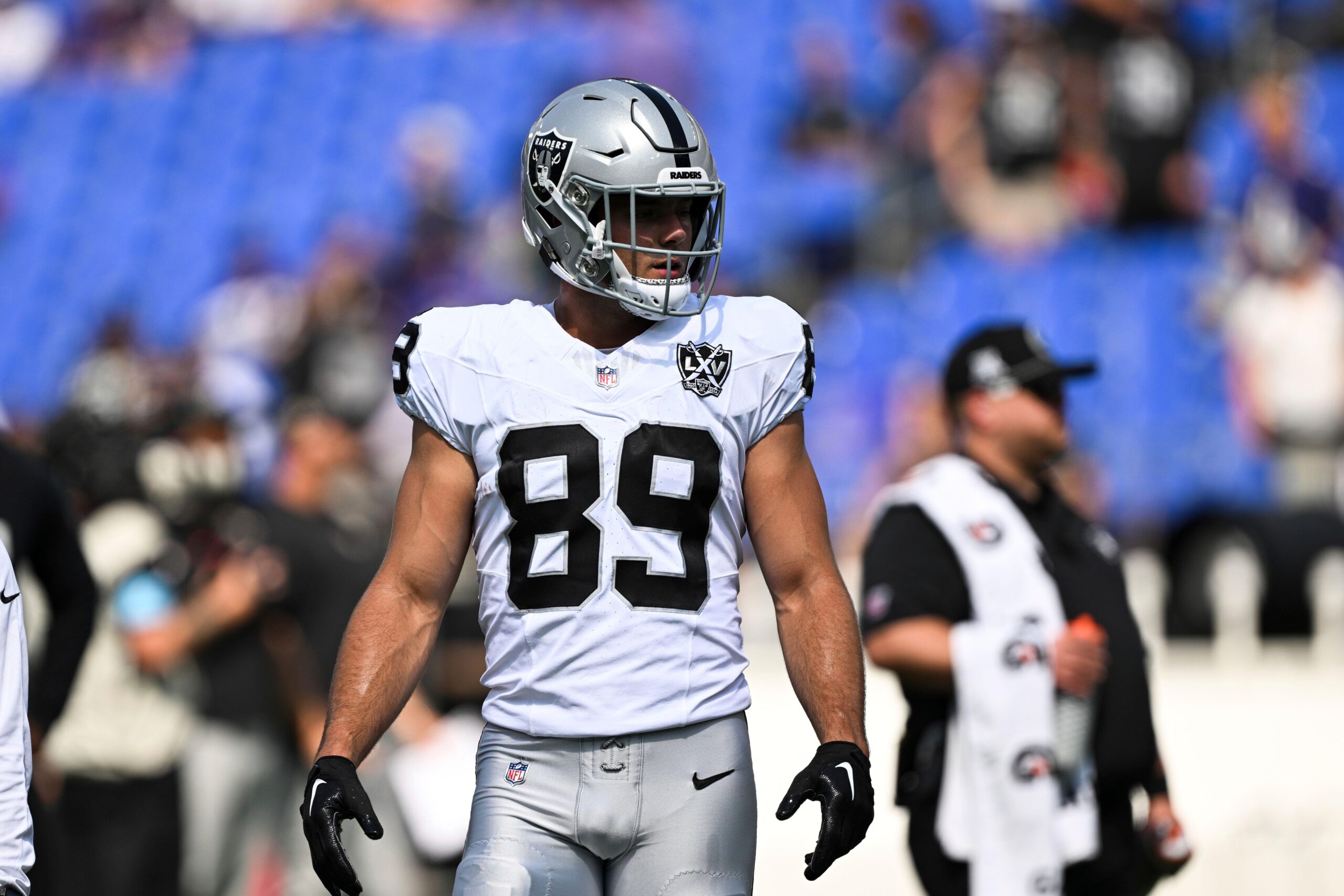
Brock Bowers
Injury: Knee Injury
Analysis: Bowers sustained a knee injury while getting tackled out of bounds. In the following play, Bowers was seen struggling to push off his left leg. He apparently was eager to return to the game, and Vegas is stating his injury is nothing to be concerned about. Following the Raiders' practice reports this week will be critical to see how Bowers progresses towards next week.
Primary beneficiary if time missed: Michael Mayer
George Kittle
Injury: Hamstring Injury
Analysis: Kittle exited Sunday’s game in the first quarter with a hamstring injury and is expected to miss 3–5 weeks, consistent with a grade II strain. Fantasy managers will need to find a replacement in the meantime. Hamstring injuries carry a 20–30% re-injury rate, and given Kittle’s age (31) and history of prior strains, his risk is even higher.
While hamstrings impact sprinting and explosive movements, tight ends historically only see about a 2% dip in fantasy points and a 14% drop in snap rate in their first game back, giving reassurance that Kittle should remain a strong fantasy option once he returns.
Primary beneficiary if time missed: Jake Tonges

Evan Engram
Injury: Calf Injury
Analysis: Engram is dealing with a calf strain. Calf injuries are critical for acceleration and sprinting and can significantly impact athletic performance. Data shows a 15-20% recurrence rate, and for Engram, who is 31 years old and has a lengthy injury history, re-injury will be a concern.
Tight ends average missing 1.9 games and a 13% dip in fantasy points after a calf injury.
Primary beneficiary if time missed: Adam Trautman