
Site Super Admin • November 1, 2025
NFL Week 9 Injury Updates & Fantasy Impact
As we head into Week 9, fantasy managers are feeling the pressure with another crowded injury report across every position. Several high-profile players are returning from soft-tissue injuries, while others continue to battle lingering issues that could limit performance, touch volume, or availability. From quarterback

As we head into Week 9, fantasy managers are feeling the pressure with another crowded injury report across every position. Several high-profile players are returning from soft-tissue injuries, while others continue to battle lingering issues that could limit performance, touch volume, or availability. From quarterbacks working through lower-body mechanics, to running backs testing ankle stability, to wide receivers nursing soft-tissue strains and hip irritation, properly interpreting these injuries is critical for lineup decisions. Below, I break down how all 38 player injuries can affect player usage, explosiveness, and fantasy expectation this week, with actionable context you won’t find on a generic injury report.
Quarterbacks

Kyler Murray
Injury: Foot sprain
Analysis: Murray has been practicing this week, but with the backups, and we know now Jacoby Brisset will start again, but Murray may be active. I will write to explain how his injury could impact him IF he sees the field.
A right mid-foot sprain can be a problem for a right-handed thrower, especially one who is also a high-level runner. The midfoot is a critical junction in the foot whose primary responsibility is to adapt its shape depending on its role during the walking, running, or throwing cycle. When pushing off to run or throw, the foot must rapidly supinate to create a rigid foot to push off; however, when landing from a stride, or during the follow-through phase of throwing, the right foot pronates to allow shock absorption (running/walking) and to allow full rotation during the follow-through of a throw. The midfoot is a critical component of the supination and pronation motion, and when injured, these motions can be impacted.
The good news for Murray is that a mild sprain typically does not have lasting effects on these key motions. Three weeks to rest and rehab should help quite a bit, especially for throwing, but rushing upside may be limited. Re-injury is, of course, a risk, and with Murray having a down season even before this injury, starting him when he resumes his starting role may be a risk.
Jayden Daniels
Injury: Hamstring strain
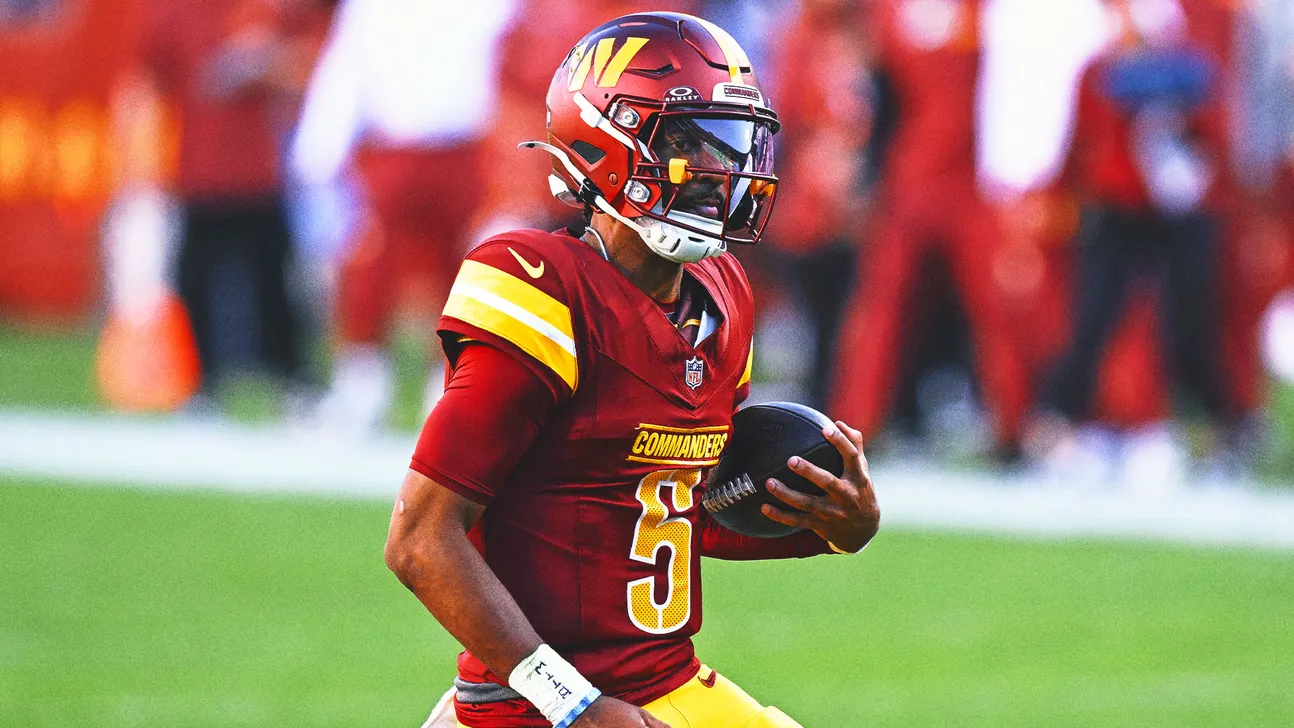
Analysis: Jayden will play this week after missing one game with a hamstring injury. One week is not enough for full muscle healing, and his muscle strength is likely not back to its baseline, and re-injury risk will be high. Furthermore, this is his right hamstring, meaning he needs to push off the right leg for throwing power, as well as likely impacts on rushing upside. He should have enough strength to make most of the throws, but don't be surprised if he misses a few deep balls short. While Daniels is a tremendous thrower, a good chunk of his fantasy upside also comes from his rushing. I expect Washington will protect him this week and not call many designed runs, and Daniels will be less likely to take off scrambling, overall reducing his rushing output.

Brock Purdy
Injury: Toe injury
Analysis: Purdy is expected not to start for the fifth straight game. His actual game status is listed as questionable, and reports out of San Francisco suggest he is getting close to being ready, but Mac Jones will start again. A right big toe injury impacts a quarterback in many ways. The big toe is the last point of contact with the ground as the passer powers off his foot to throw the ball. When injured, he cannot create full power from the ground and must compensate by overusing his arm. Mobility would obviously be impaired as well.
Purdy is coming up on a month and a half since his re-injury, and by now, a good amount of healing should have taken place. San Francisco is likely being extremely cautious with their quarterback to ensure another re-injury does not occur.
Bryce Young
Injury: High ankle sprain
Analysis: Young is fully practicing this week and is in line to return this week. Young's right high ankle sprain was never considered serious, which has helped his quick recovery. A grade I high ankle sprain is not going to lead to much instability within the ankle, making it more likely that Young has full throw power and the ability to step up well in the pocket. Since 2017, quarterbacks have averaged no decline in fantasy points in the first game after a high ankle sprain. Re-injury is a concern (10%), but most fantasy managers are not starting Young anyway, but may rely on him to provide for Tet McMillan, Rico Dowdle, and Chuba Hubbard. Young is on track to return close to, if not fully at, his pre-injury baseline this week.
JJ McCarthy
Injury: High ankle sprain
Analysis: McCarthy is also tracking towards returning from a high ankle sprain this week. McCarthy differs greatly from Young, however. McCarthy will have missed six weeks due to his injury, which tells us ankle instability was a big problem early on. By now, stability is likely restored, but he runs the risk of developing long-term impairments in ankle stiffness, which can impact future injury risk. Re-injury as well as other injuries in the right leg are a risk, though, being a pocket passing quarterback, I am not as concerned as I would be if he were a running back or receiver. Similar to Young, most fantasy managers are not relying on McCarthy this week, but he must be able to provide for Jefferson, Addison, and the rest of the offense. His ankle is likely stable enough to throw the ball well, and Jefferson and Addison remain must-starts this week.
Michael Penix
Injury: Knee bone bruise
Analysis: Penix is off the injury report and will start after missing last week with a knee bone bruise. Bone bruises heal well, and once the bruising has subsided, function returns to normal. This won't be a problem for Penix this week.
Joe Flacco
Injury: Right AC joint sprain
Analysis: Flacco is questionable after missing Friday's practice. Flacco suffered an AC joint injury on his right (throwing) shoulder last week. The AC joint motion is part of the throwing process, and when injured, pain or stiffness can limit the thrower's ability to move through the entire arm of motion. Cincinnati's medical staff may try to inject his shoulder to give him some relief, but this does not always work. If Flacco is able to play, quarterbacks average a 24% decline in fantasy points after an AC joint injury.
Running Backs
Alvin Kamara
Injury: High ankle sprain
Analysis: Kamara took an awkward hit at the end of the second quarter in week 8, where a defender landed on his left ankle from the outside while Kamara's foot was planted. This creates an eversion moment and often leads to high ankle sprains. Kamara ended up logging his lowest snap total of the year, but is still expected to play through the injury this week. He was limited in practice all week, which tells us he is not 100%, but Kamara is no stranger to playing through injury.
A high ankle sprain can impact a player's ability to change direction quickly, but often running backs can play well through a mild version of the injury. Not missing a single practice (though limited in all) and expected to play this week, Kamara's injury is mild at worst, and he shouldn't see more than a mild dip in fantasy output. Running backs average no drop-off in fantasy points after a high ankle sprain. It is worth noting that Kamara had been dealing with an ankle injury ahead of last week's game; it is unclear if this is related at this time.
D'Andre Swift

Injury: Groin strain
Analysis: Swift must have aggravated his groin injury last week and will miss week 9. The groin injury is a key player in running, helping extend the hip and maintain balance on one leg. While other muscles can often pick up the slack and allow running backs to play well through a mild injury, when the injury is significant enough or painful enough, it is difficult to play through. Historically, running backs average missing under one game, providing hope that Swift can play in week 10. Running backs average no drop off in fantasy points in the first game after a groin injury.
Isiah Pacheco
Injury: MCL sprain

Analysis: Pacheco is unlikely to play in week 9 after suffering an MCL sprain in week 8. Kansas City has a week 10 bye, and Pacheco would be best served with at least two weeks to rehab. The MCL receives a sound blood supply, and proper healing usually occurs, but it takes some time. While in the acute phase of injury, there is considerable stiffness and, depending on severity, instability that makes it difficult to play through.
While not usually a long-term issue, MCL injuries pose a big threat to running backs in the short term. Since 2017, running backs have averaged missing three weeks due to injury and see a 15-20% dip in fantasy points in the first three weeks after injury. Pacheco has not been good this season, and fantasy managers with shorter rosters or no room on their injured reserve may even consider dropping him.
Rhamondre Stevenson
Injury: Toe injury
Analysis: Stevenson will miss week 9 with a toe injury. Toe injuries can be tough for running backs, as the big toe is the last point of contact to the ground when running and is a critical part of the pushoff of the ground when sprinting and cutting. Mild toe injuries usually heal well and show no loss of function or production. A moderate-severe toe injury can lead to stability loss within the toe, making it difficult to generate pushoff from the ground. So far, New England has not given word about Stevenson's injury severity, so we will monitor his status next week for a better idea.
Woody Marks
Injury: Calf strain
Analysis: Marks was added to the injury report on Thursday but was back at practice on Friday. The calf muscle is critical for acceleration and sprinting, but running backs can often play well through a mild injury. In fact, since 2017, running backs have averaged just a 4% decline in fantasy points in the first game after a calf injury. Marks has been good at times this year, and his injury should not get in the way of him being a desperation RB2 or flex, but hopefully, fantasy managers do not need to rely on him just yet.
Devin Neal
Injury: Ankle injury
Analysis: Neal is off the injury report and will play through a mild ankle injury. A more severe ankle injury can cause issues with stability and cutting, but being fully removed from the injury list casts little doubt that he is very close to 100%. Running backs average an 8% dip in fantasy points after an ankle injury, but Neal actually finds himself in an interesting position. His teammate Alvin Kamara is also banged up. Though expected to play, Kamara logged a season low 51% of snaps last week, with Neal logging a season high 46%. Kamara is more injured than Neal, making it possible that New Orleans leans more on the rookie this week. He still is not worth a start in traditional formats, but may be worth a flier in DFS leagues.
Wide Receivers

Puka Nacua
Injury: Lateral ankle sprain
Analysis: The darling of fantasy football is likely to return in week 9 after missing week 7 with an ankle sprain. Ankle sprains can impact a receiver's lateral stability, making it tough to run crisp routes; however, Nacua's injury was not very severe, and he likely did not lose much, if any, passive stability. Receivers average a 10% dip in fantasy points in their first game after injury. For a player of Puka's caliber, you can throw that stat out. He should immediately return to his dominant form. Re-injury is a real concern, however, as ankle sprains are the second most common injury to experience recurrence (hamstrings are #1).
Calvin Ridley
Injury: Hamstring strain
Analysis: Ridley will miss his third straight game with a hamstring injury. We knew from the start this would take some time for Ridley to get over; a 30-year-old's muscles don't heal as quickly as they used to. Receivers average missing just under two games with hamstring injuries, but true muscle healing timelines take 21-28 days for the hamstring to regain most of its tensile strength. The Titans have a bye in week 10, Ridley could be ready to return after.
Terry McLaurin
Injury: Quad injury
Analysis: McLaurin re-injured his quad and will miss some more time. I wrote numerous times over the past month about my concerns with McLaurin and his mysterious quad, but maybe a core injury. A pure quad muscle injury does come with a 10% recurrence risk, but McLaurin's injury always seemed like more than that. Seeing a core specialist raised suspicion that his injury was likely either the rectus femoris proximal tendon or a sports hernia, both of which athletes usually try to conservatively manage first, but do not always go well. While Washington says McLaurin won't miss much time, the savvy fantasy manager will use that statement as trade bait.
Rome Odunze
Injury: Heel injury
Analysis: Heel injuries can be tricky because they usually don't go away without complete rest, which will not happen until the offseason. The good news, however, is that as long as the injury is only mild, they usually feel fine after warming up and do not affect speed, agility, or any form of production. With Odunze off the injury report after a full practice on Friday, we can safely assume his injury is mild and should not stop him from continuing his tremendous second season. Odunze is a great start against Cincinnati.
Drake London
Injury: Hip injury
Analysis: London should return this week after missing week 8 with a hip injury. We would love for Atlanta to give more details on what tissue was injured, but what fantasy managers can work off of is understanding that most hip injuries are relatively benign when it comes to impacting fantasy stats. In fact, since 2017, receivers have averaged no drop-off in fantasy points after a hip injury.
Of course, the type of injury can make a difference; a hip flexor strain will impact sprinting and the ability to get deep, whereas a hip pointer or labrum injury would impact change of direction. We don't know what exactly London is dealing with, but only missing one week gives us confidence that it is not a serious injury, and he should be able to play very well.
Travis Hunter

Injury: Knee injury
Analysis: Hunter injured his knee in practice on Thursday and has been placed on the injured reserve. The only information we have so far is that this was a non-contact injury and his ACL is intact. There are numerous tissues that could be implicated here, but without a video of the injury or any more information, we would just be guessing. All we know is he will miss at least four games.
Jakobi Meyers
Injury: Knee injury
Analysis: Meyers is ready to play after the bye week. A mild knee injury with an additional week's rest should not be a problem for the Raiders' top receiving option. I do not expect his speed or agility to be limited, and his game should not be impacted. He has not been good this season, but is still the Raiders' top wide receiver. Teammate Brock Bowers will also be back, which could open more space for Meyers, but he is a WR3/4 at best.
Cooper Kupp
Injury: Hamstring Strain, Heel Injury
Analysis: Kupp was already dealing with a heel injury, but apparently injured his hamstring in practice this week. The 32-year-old is no stranger to injury at this point in his career, and a hamstring injury will certainly slow him down if it does not keep him out entirely this week. Receivers average a 15% dip in fantasy points after a hamstring injury. Kupp is averaging just 6.6 points per game; even before injury, he is not a great start at this point in his career.
Rashid Shaheed
Injury: Hip injury
Analysis: Shaheed injured his right hip late last week, but this does not appear to be a serious injury. He jogged off the field and was limited in practice every day this week. The video review is not clear, but we can see him pointing to the outside of his hip, making it unlikely that this is a hip flexor injury, but possibly a hip pointer. Hip injuries like this can impact his change-of-direction ability, but are less likely to impact his deep speed. Receivers historically average no drop off in fantasy points after a hip injury.
Josh Downs
Injury: Hip injury
Analysis: Downs' hip injury was mild, and he has been removed from the injury report. Like Shaheed above, we don't know exactly what he is dealing with, but receivers average no drop off in fantasy points. He's a fringe starter to begin with, but his injury should not slow him down.
Nico Collins
Injury: Concussion
Analysis: Collins has cleared the concussion protocol and will play. No performance decline is expected.
Christian Kirk
Injury: Hamstring strain
Analysis: Kirk is back this week after missing two games with the second hamstring injury of the season. Kirk's hamstring should have regained enough strength and speed to be productive, but is definitely at a higher risk of re-injuring again. Kirk has not been a reliable starter this season and is best left on the bench.
Marvin Mims
Injury: Concussion
Analysis: Mims has been ruled out for week 9 with a concussion.
Luther Burden
Injury: Concussion
Analysis: Burden has been ruled out for week 9 with a concussion.
Ricky Pearsall
Injury: PCL sprain
Analysis: Pearsall will miss his fourth straight game with a PCL injury. The PCL is a critical passive stabilizer and is loaded with proprioceptors, which help an athlete know where their leg is planting without looking. PCL injuries can eventually be played through; however, stability and confidence must be restored first, and it usually takes athletes 4-6 weeks to look good again. Pearsall has not regained enough stability to quickly and confidently plant and change direction.

Tight Ends
Brock Bowers
Injury: PCL sprain
Analysis: Bowers will make his return after missing most of the season with a week one left PCL injury. As I have written over and over again, and as listed above with Ricky Pearsall, PCL injuries zap explosiveness for about 4-6 weeks. Bower now has had ample time to rest, rehab, and regain stability and explosiveness, and should look elite again. He is an auto start in week 9.
Kyle Pitts
Injury: Ankle injury
Analysis: Pitts was a blip on the injury radar earlier this week after logging a limited practice on Wednesday, but is off the report and full go for this week. A more severe ankle injury could be a concern, but a mild injury won't impact Pitts performance this week. Tight ends historically average no drop-off in fantasy points after an ankle injury.
Pat Freiermuth
Injury: Quad injury
Analysis: Freiermuth was dealing with a quad contusion but has been cleared to play this week. Contusions clear up nicely and usually don't lead to any functional impact. Tight ends average a 22% dip in fantasy points after a quad injury. Combining this stat with Freiermuth's lack of production this season makes him an impossible start.
Cole Kmet
Injury: Back injury
Analysis: Kmet will play this week after missing last week with a back injury. Typically, players can manage well through a back injury. Don't expect this to impact Kmet's stat line.
Dalton Schultz
Injury: Knee / Shoulder injury
Analysis: Schultz logged a full practice on Friday and, while questionable, is expected to play through shoulder and knee injuries. A knee injury will typically impact lateral agility, which is not exactly Schultz's game, making the knee unlikely to be a problem for him. Tight ends average an 18% dip in fantasy points after a shoulder injury. Schultz is not a great start to begin with, and his injuries further emphasize this.